
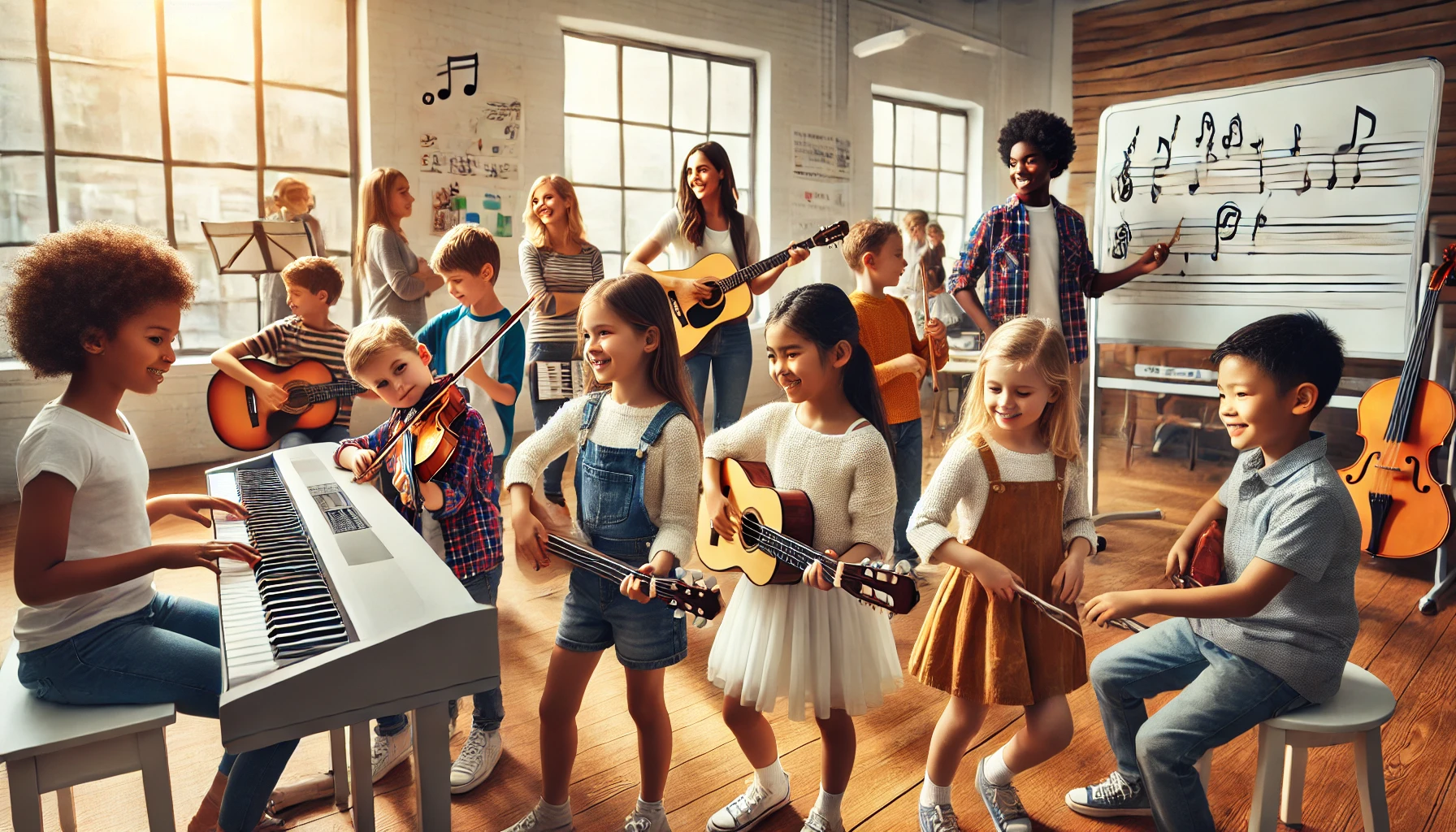
How Music Education Shapes Young Minds: Key Advantages for Children
Learning music as a child offers far more than just the ability to play an instrument or sing a tune. Scientific research and educational experts consistently highlight the unique benefits that music education has on young minds, influencing cognitive abilities, emotional health, social skills, and even academic performance.
Below, The Ron Dixon Foundation explores the key advantages of learning music early in life and how it sets a solid foundation for future success.
1. Cognitive Development and Enhanced Brain Function
When a child learns music, the brain activates multiple regions responsible for memory, motor skills, and auditory processing.
Studies indicate that children who study music tend to have better problem-solving skills, improved attention spans, and enhanced spatial-temporal skills, which are essential for subjects like math and science.
- Memory and Concentration: Learning an instrument requires memorization of notes, rhythms, and sequences, strengthening both working memory and long-term recall. Regular practice hones concentration, a skill that can translate into better performance in academics.
- Enhanced Language Skills: Musical training improves phonetic awareness and processing, which are directly linked to language development. Children who engage in music classes often display stronger reading abilities and vocabulary skills.
2. Emotional Benefits and Self-Expression
Music provides children with a unique outlet for self-expression and emotional exploration, which is particularly valuable in early developmental stages.
Through music, children can learn to manage their emotions, communicate complex feelings, and find healthy ways to cope with challenges.
- Emotional Regulation: Playing or listening to music helps children become more aware of their emotions, fostering self-awareness. Through this awareness, they learn how to channel emotions productively, which supports mental resilience.
- Increased Self-Esteem and Confidence: Successfully learning a piece or performing in front of an audience boosts a child’s self-confidence. The discipline involved in mastering an instrument or song instills a sense of pride and achievement, which positively impacts other areas of their lives.
3. Enhanced Social Skills and Teamwork
Music often involves collaboration, whether it’s in choir groups, bands, or music classes.
Engaging in these group settings encourages children to work together, communicate effectively, and appreciate teamwork.
- Improved Social Interaction: Music classes and group performances require children to interact with peers, improving their social communication skills. They learn how to take turns, provide constructive feedback, and celebrate others’ successes.
- Empathy and Understanding: Listening to different genres and cultures of music fosters empathy and cultural awareness. Children exposed to diverse musical styles are more likely to appreciate different perspectives, which enhances their understanding of others’ emotions and viewpoints.
4. Improvement in Academic Performance
Music education has been linked to better academic performance across multiple subjects, particularly in math and reading.
The skills children acquire in music education often translate into their studies.
- Enhanced Math Skills: Musical training involves rhythm and timing, which connect closely with mathematics. This has been shown to improve mathematical reasoning, pattern recognition, and problem-solving abilities.
- Better Reading and Language Skills: Music notation and lyrics help children develop literacy skills, improve their comprehension, and foster an understanding of rhythm and structure, which aids in reading fluency.
5. Discipline, Patience, and Perseverance
Learning an instrument or mastering a piece of music requires patience and persistence.
Children in music education are familiarized with the process of setting goals, practicing regularly, and working steadily towards improvement.
- Goal-Setting and Achievement: Music education encourages setting realistic goals, which helps children understand the value of hard work and the steps required to achieve their objectives.
- Resilience in the Face of Challenges: Children learn to handle constructive criticism and setbacks, developing resilience as they continue to practice and improve. This resilience is valuable in any area of life, teaching them to approach difficulties with a positive attitude.
6. Creative Thinking and Problem Solving
Music education fosters creativity, encouraging children to explore different sounds, rhythms, and interpretations.
This imaginative aspect promotes flexibility in thinking and supports innovative problem-solving abilities.
- Boosts Creative Exploration: Experimenting with different instruments or musical styles sparks children’s curiosity and encourages them to think outside the box.
- Strengthens Problem-Solving Skills: Learning to play music requires quick thinking and adaptability. For example, if a child makes a mistake while playing, they must think critically to correct it in real-time. This skill translates into real-world problem-solving abilities.
Final Thoughts: Investing in a Lifetime of Benefits
Music education offers children numerous benefits that extend well beyond childhood. From cognitive and academic improvements to emotional resilience and social skills, the impact of learning music early in life is profound.
By providing children with access to music education, parents and educators help shape well-rounded, confident, and capable young individuals who are equipped with valuable skills for life.